


Van Rysel has introduced two new gravel bikes, the aero-focused RCR-G and the comfort-led EDR-G, arguing that racing and exploring now demand entirely different machines. We look at the specs, the claims and what the brand's product managers say about where gravel is heading.
Dawn comes slowly to Flanders. Mist sits low over the fields outside Kortrijk, and somewhere beneath it the cobbles are waiting, the same ancient stones that have humbled champions on the Ronde for a hundred years. This landscape is built on contrasts: hellingen and polders, cobblestone brutality and quiet farm lanes, a place where the ground itself seems to demand a choice. Race it, or explore it.
Van Rysel, the cycling brand that takes its name from the Flemish for “From Lille,” has introduced two new gravel bikes, the RCR-G and the EDR-G, and rather than building one machine to do everything, it has built two bikes, each with a single, uncompromising purpose. Gravel is no longer one discipline. It’s both racing and exploring, and so riders need a bike to meet their needs. Has Van Rysel done just that?
Built To Win
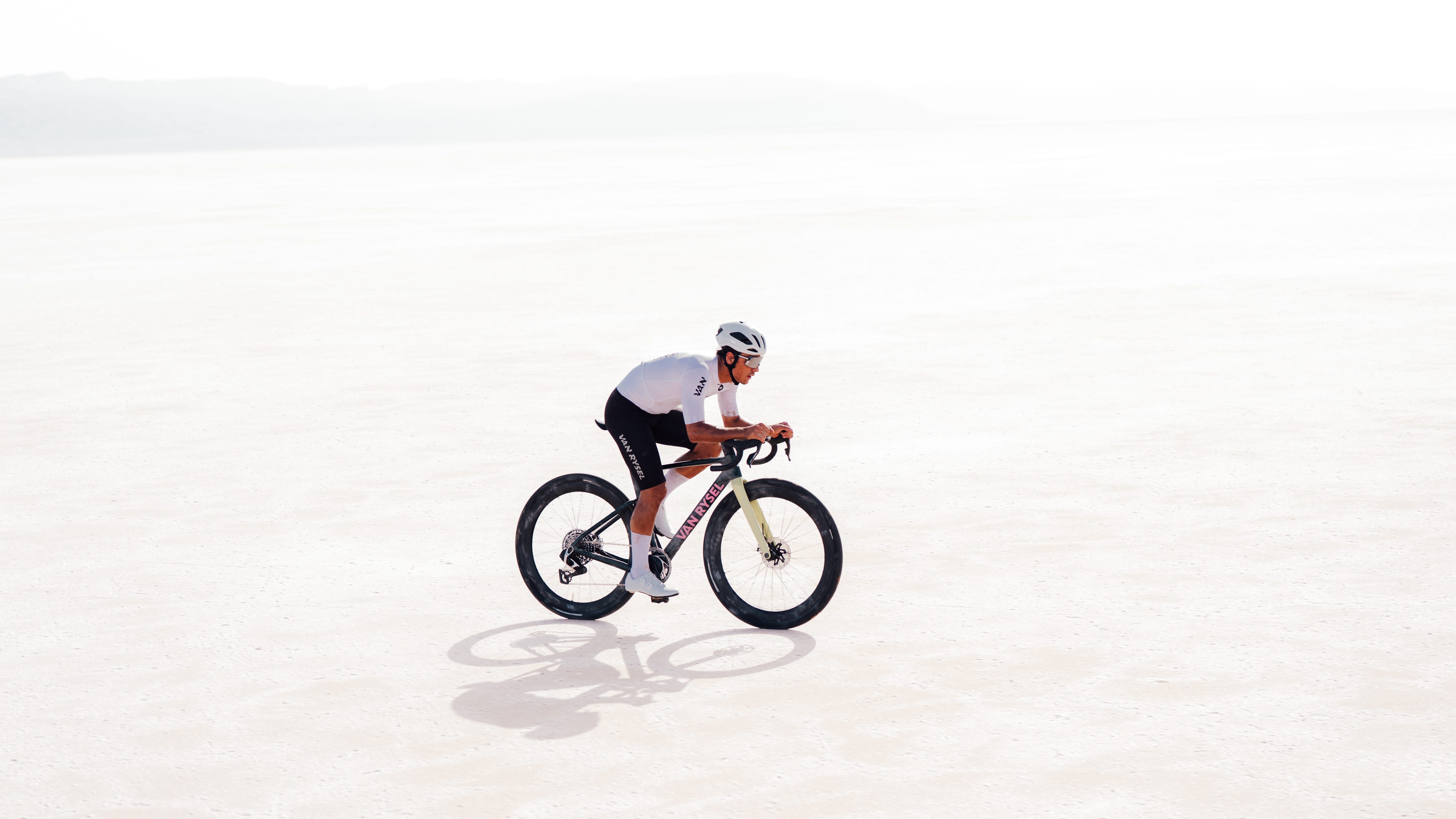
The RCR-G is pitched pure and simple as the racer. Developed alongside riders from the DECATHLON CMA CGM WorldTour team and drawing on the aerodynamic heritage of the RCR-R road bike, Van Rysel says it was never meant to be an adventure bike pressed into race duty, but conceived from its first sketch as a weapon for modern gravel racing. The brand points to CFD analysis, virtual prototyping and long hours in the wind tunnel behind the numbers it’s putting forward: a claimed 8.6 watt aerodynamic saving over the outgoing GCR platform, an 885g high-modulus carbon frame in a size medium, and a flagship SRAM RED build said to weigh just 7.7kg. As with most manufacturer figures, these are worth treating as a starting point rather than gospel until independent testing has its say.
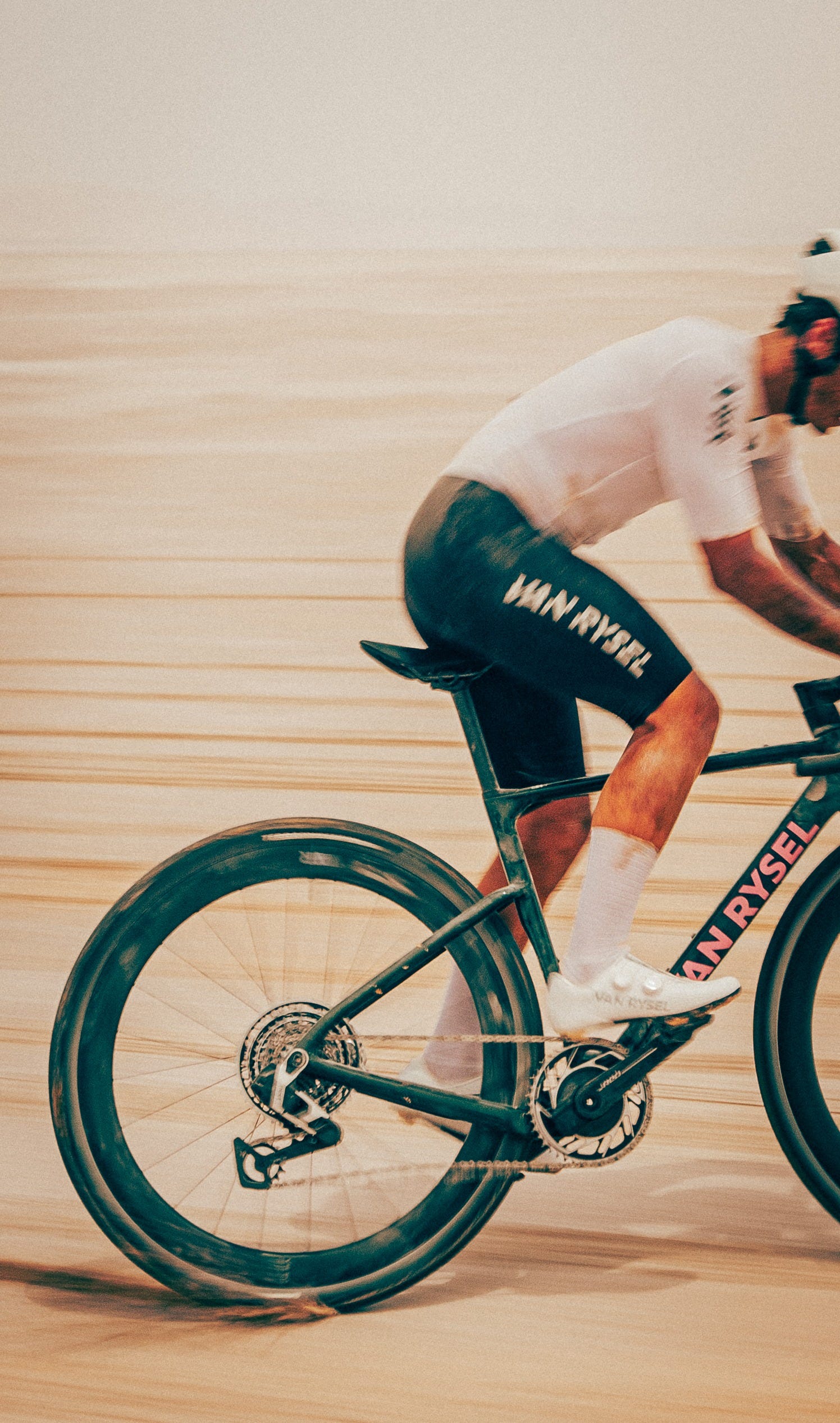
On paper at least, it carries the marks of a bike bred for the sharp end of the sport: tyre clearance up to 50mm, chainrings up to 50T in 1x or 52T in 2x, three bottle cage mounts, top-tube bento box compatibility and UDH compatibility for the newest drivetrains.
Jeremie Debeuf, Van Rysel’s Race Product Manager, frames the project around two distinct riders rather than one.
“We developed those bikes based on two gravel usage scenarios: racing and exploring, and all our choices were made to fit perfectly with those programmes,” he said.
Pressed on whether the split is really so clean, Debeuf didn’t soften it. “Based on our studies of the users and customers, we feel there is a clear split in usage,” he said. Could you race the EDR-G, or explore with the RCR-G? “Anything is possible, but it wouldn’t be the ideal choice,” he said, though it’s a line that also happens to justify selling two bikes instead of one.
The bike has already had some race exposure. Stan Dewulf and Dorian Godon rode RCR-G prototypes to second and third at Sea Otter Girona in 2025, and Dewulf, Tiesj Benoot and Pierre Gautherat have raced it since. Dewulf’s own verdict, that the bike no longer gives him an excuse, is the kind of quote every brand hopes for from a sponsored rider. It will be interesting to see whether that confidence holds up once the RCR-G faces a full season of gravel’s toughest fields, rather than a curated launch narrative.
Built To Go Further, In Theory
Where the RCR-G is sharpened to a point, the EDR-G is pitched as built to unspool. Van Rysel positions it for the rider who measures a ride in hours and horizons rather than watts, for the tarmac that turns to cobbles, then forest track, then gravel road beneath a bikepacking load. The frame layup is said to be tuned to soften vibration and fatigue rather than chase raw stiffness, and more than fifteen mounting points across frame and fork are meant to let a rider rig it for whatever the road ahead asks of them.
Its most talked-up feature is a toolbox built into the frame itself, inherited from Van Rysel’s EDR road bike, tucked away yet supposedly always within reach even beneath a full set of bags. Inside sits a frame storage pack, which, according to Van Rysel, sits low and central to keep everything balanced. It contains a compact inner tube, a multi-tool, two tyre levers and a mini-pump good for up to 4 bar.
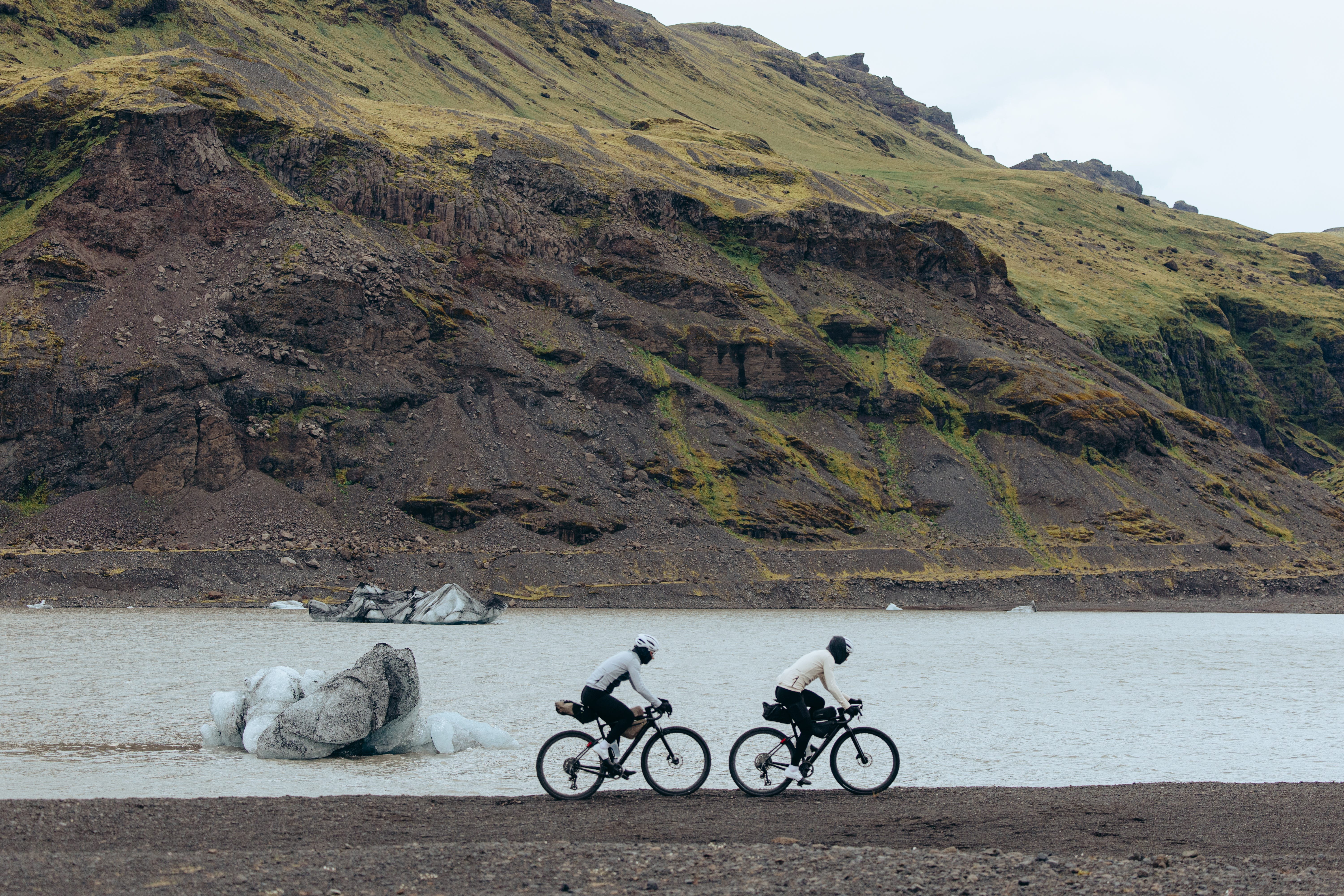
Riders who want to push further off-road can spec a RockShox Rudy XPLR 40mm suspension fork, while a Deda Gera handlebar with 24 degrees of flare is claimed to offer more places to rest tired hands over rough ground. Van Rysel says none of this was rushed: over two years of real-world testing, thirty riders and more than 25,000km reportedly went into shaping it, and ultra-distance rider Juliette Coqueret put it through a fully self-supported 10,000km crossing of Europe, according to the brand’s own account of that testing.
Rachel Gassier, Van Rysel’s Endurance Product Manager, described the ambition in plain terms: not another gravel bike, but one built to keep people exploring, where comfort and confidence are said to carry as much weight as raw performance. Whether riders feel that in practice, over the length of a real bikepacking trip, is a question only time in the saddle will answer.
A Deliberate Fork In The Road, Or A Marketing Line?
What lingers longest isn’t either bike alone, but the decision to build both, and to say so this explicitly. Van Rysel could have chased the familiar compromise, one gravel bike trying to be everything to everyone. Instead, it’s wagering, at least in its own messaging, that the sport has grown up enough to need specialists, the way road cycling long ago split into sprinters and climbers. It’s a tidy narrative, and a convenient one for a brand launching two bikes at once.
Debeuf frames it as more than a marketing angle. Asked how Van Rysel views the gravel space, he called it a genuinely viable market, one he says is already pulling riders away from pure road cycling. He also pointed to 32-inch wheels as a possible next chapter, a reminder that this fork between racing and exploring may be only the first of several the brand plans to draw.
For now, the choice on offer is straightforward, whatever the marketing behind it. Riders chasing the hammer and the finish line get the RCR-G. Riders chasing distance, self-sufficiency and whatever waits past the next farm track get the EDR-G. The RCR-G launched on 24 August 2026, with Van Rysel’s communication period for the EDR-G beginning on 27 September. Whether either bike lives up to the story Van Rysel is telling about it will only become clear once real riders, on real terrain, have had their say.
🚨 Before you go, help support PRO. Gravel!
If you enjoyed this piece, tap Like ♡ and Restack ⮂ to help us reach more riders.
Subscribe to stay up to date with everything we’re doing at PRO. Gravel.
And drop a comment 🗨️; we read every one.
But 50mm tire clearance isn't good enough for either racing or adventuring.
I'm not sure that gravel is so clearly defined into 2 choices. What about the people who don't race or bikepack but just want to ride fast and efficiently for 2-5 hours? I suspect these are the majority of people buying a gravel bike.